Sepia
Design Brief:
Produce one new object that would have been possible only with 3D scanning technology. Experiment with scanning processes, explore clay structures, and mould making processes
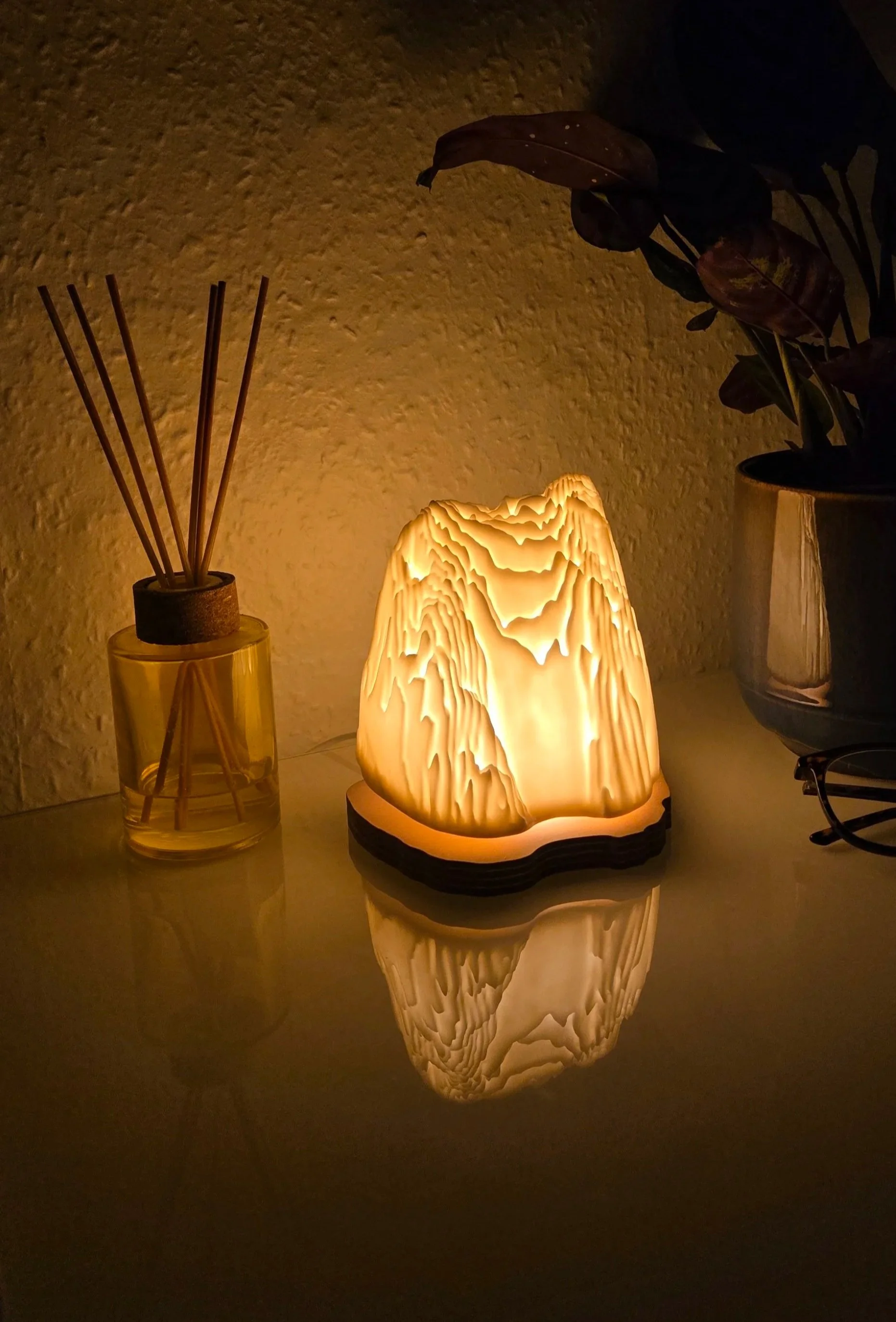
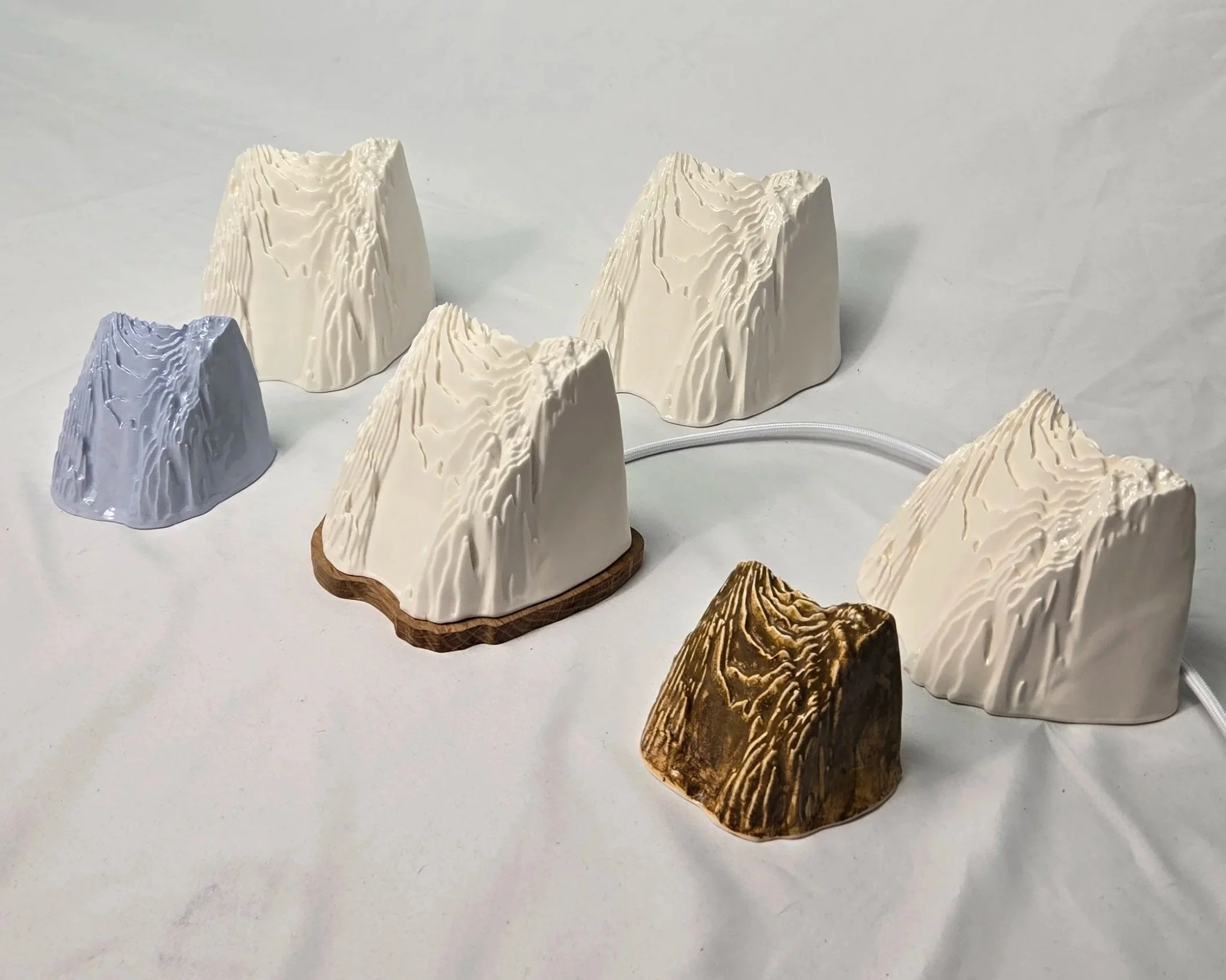
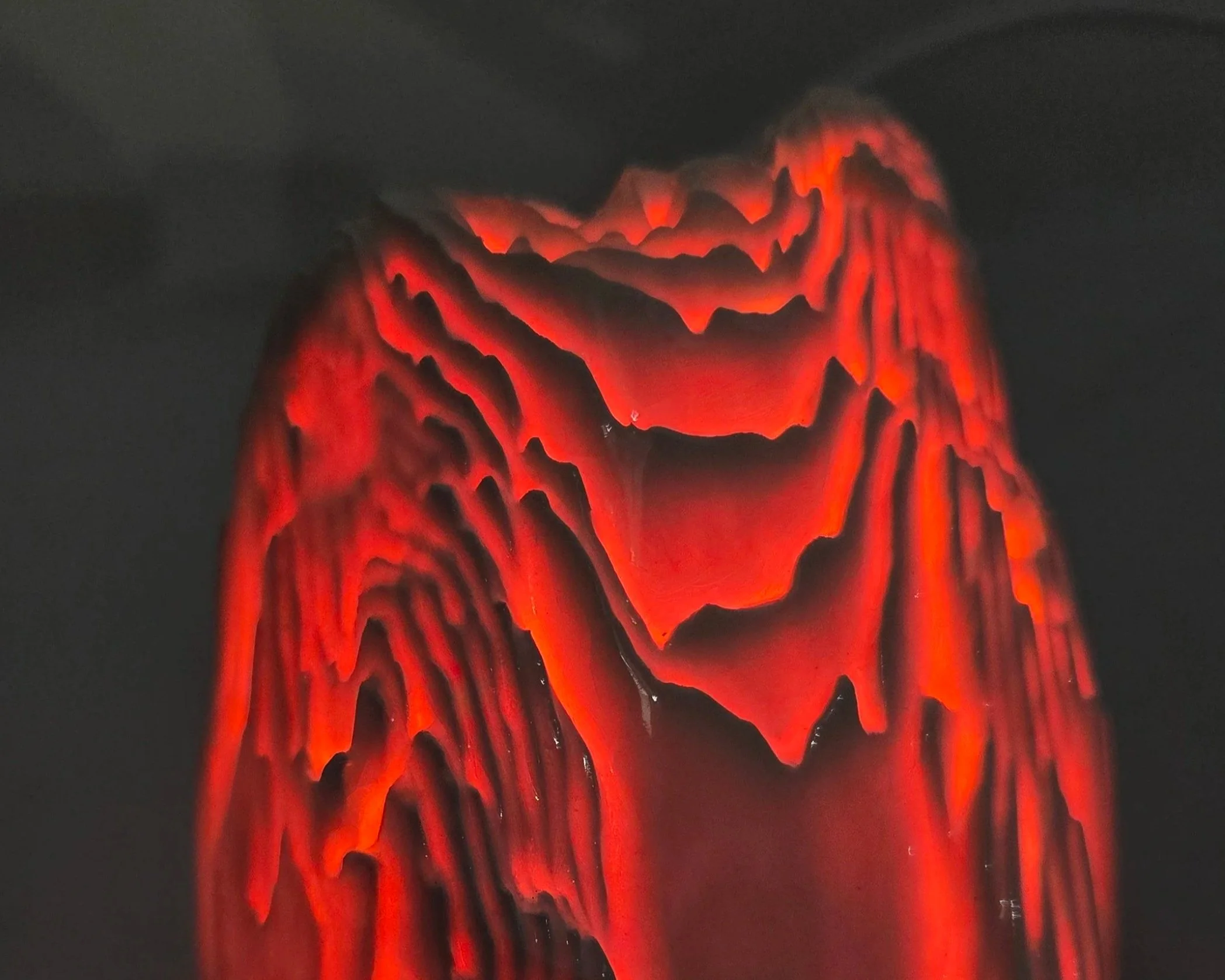
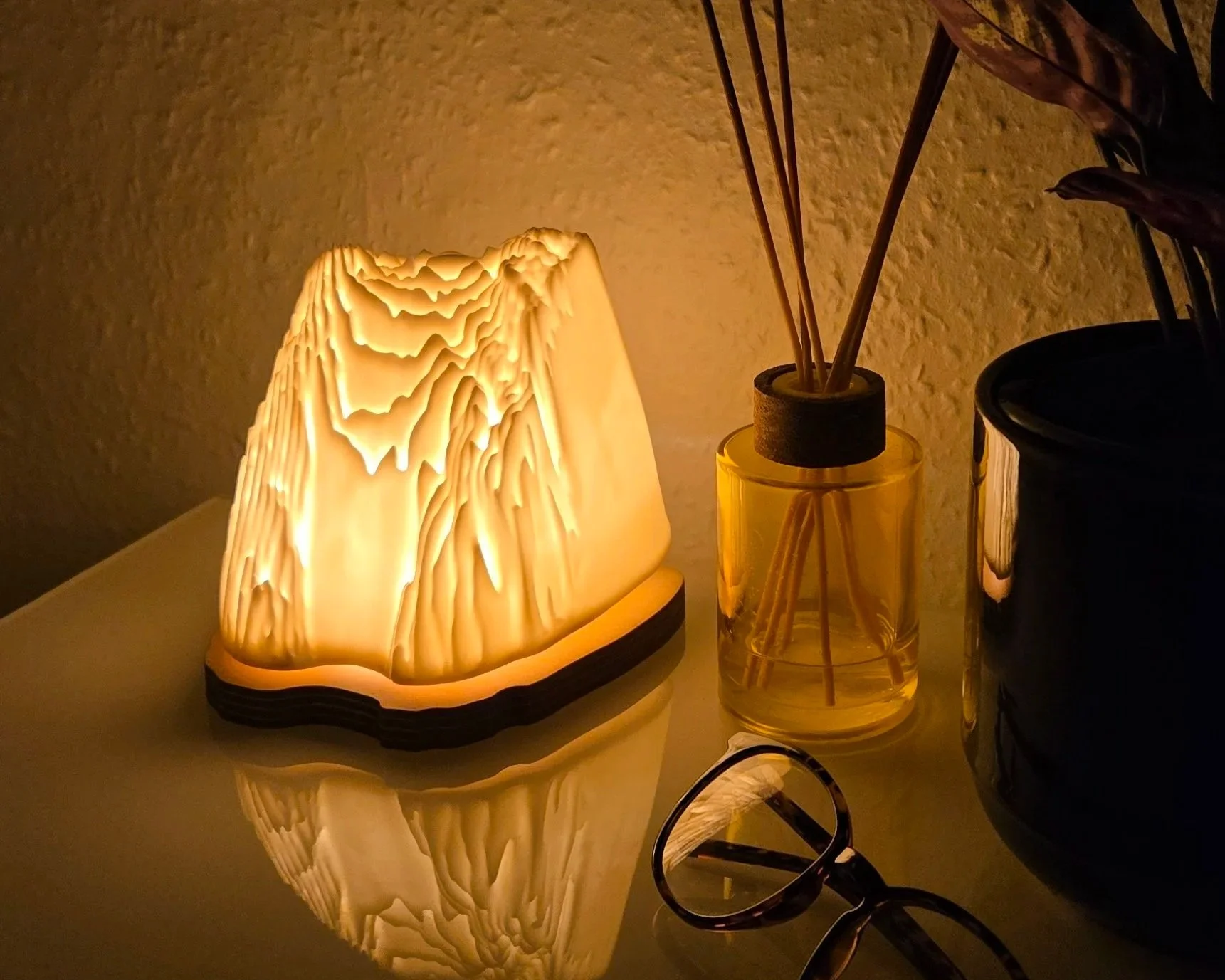
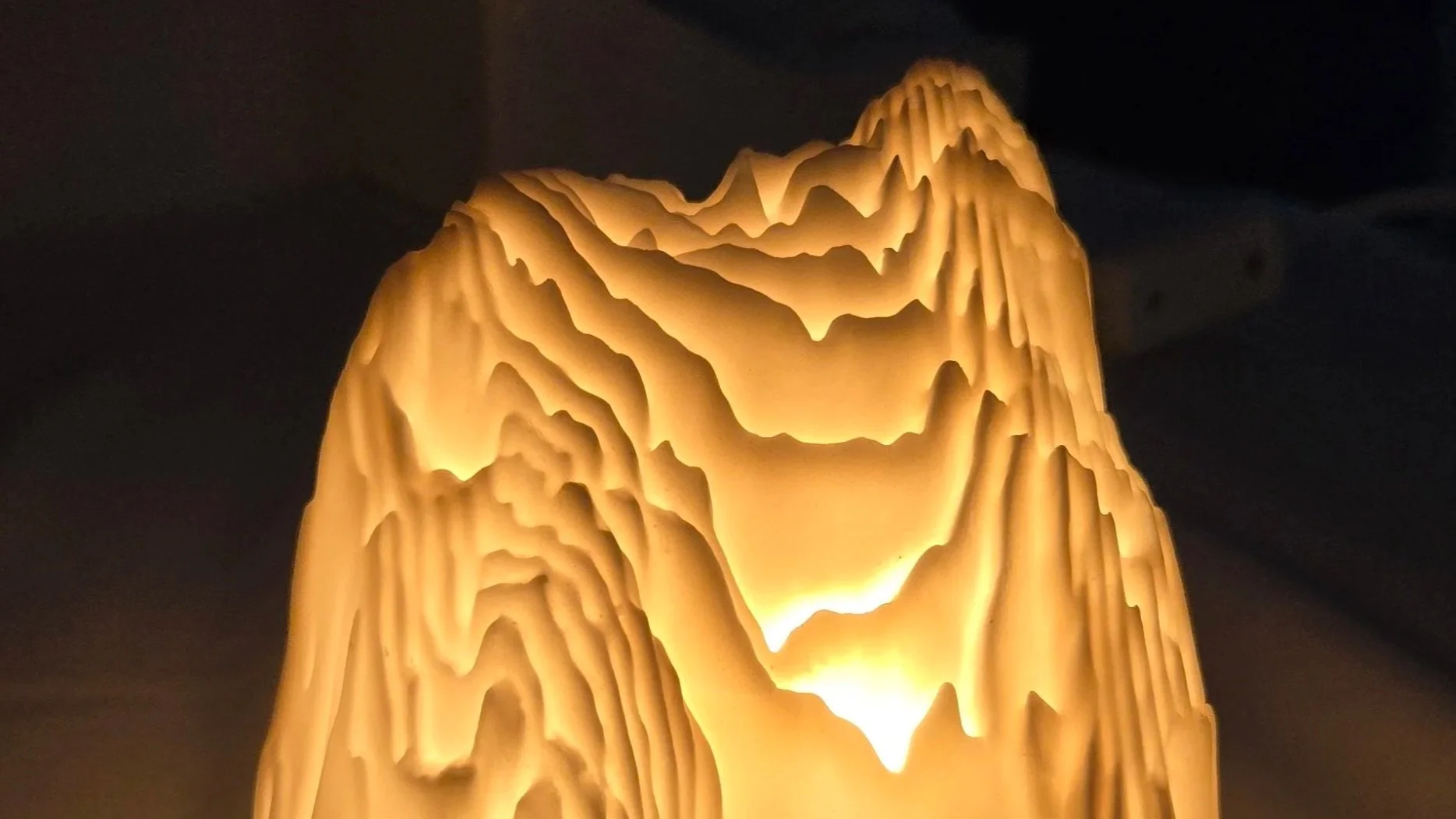
Blending old materials with new technology, Sepia is an ambient illuminated structure which takes its form by accentuating the corroded calcium layers of cuttlefish bones. Sepia uses translucent parian clay paired with a solid wood base to create a grounded and calming pairing, perfect for any side table
-
Parian slip body
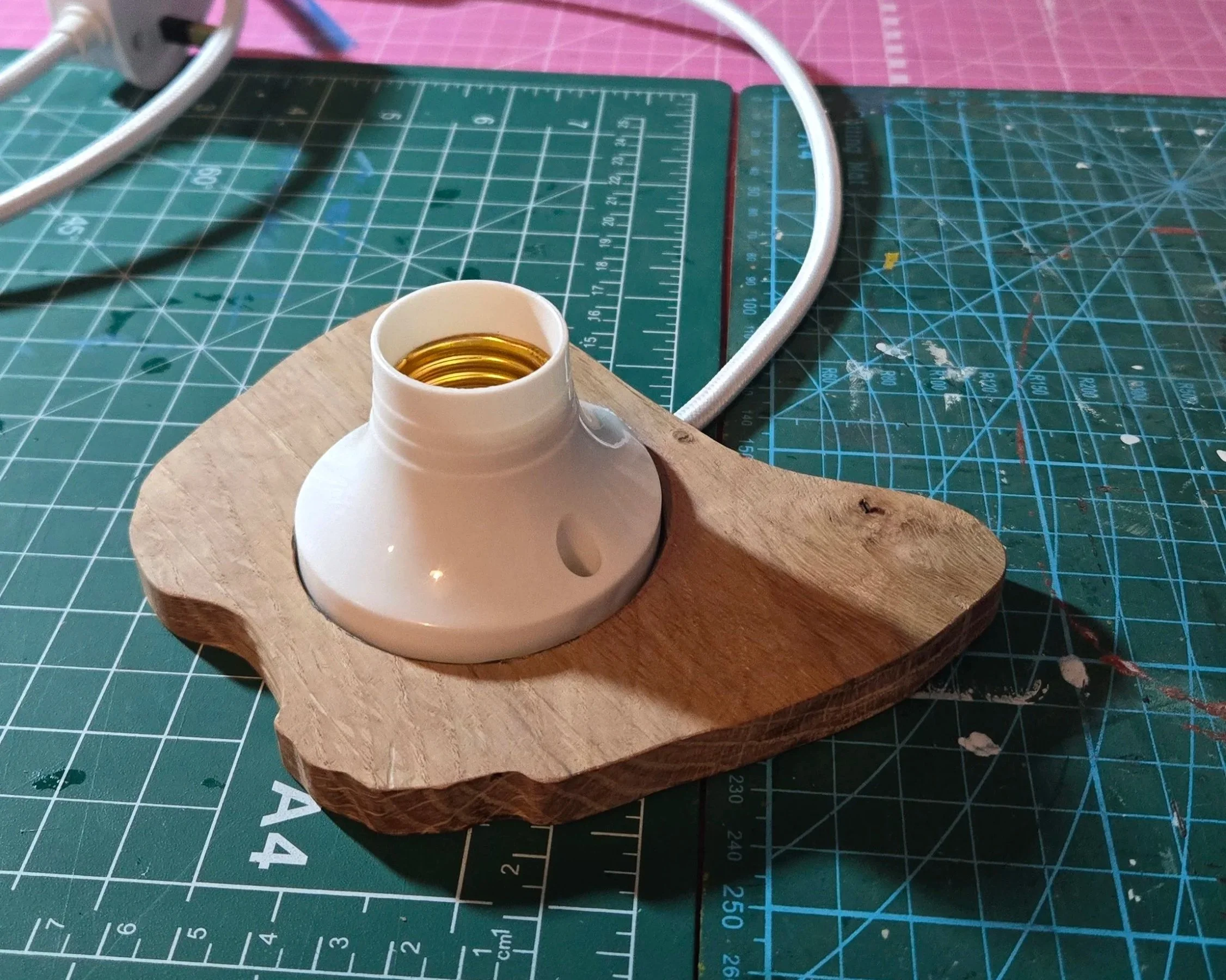
Solid oak/Poplar ply base
Braided nylon cord
E14 bulb and holder
-
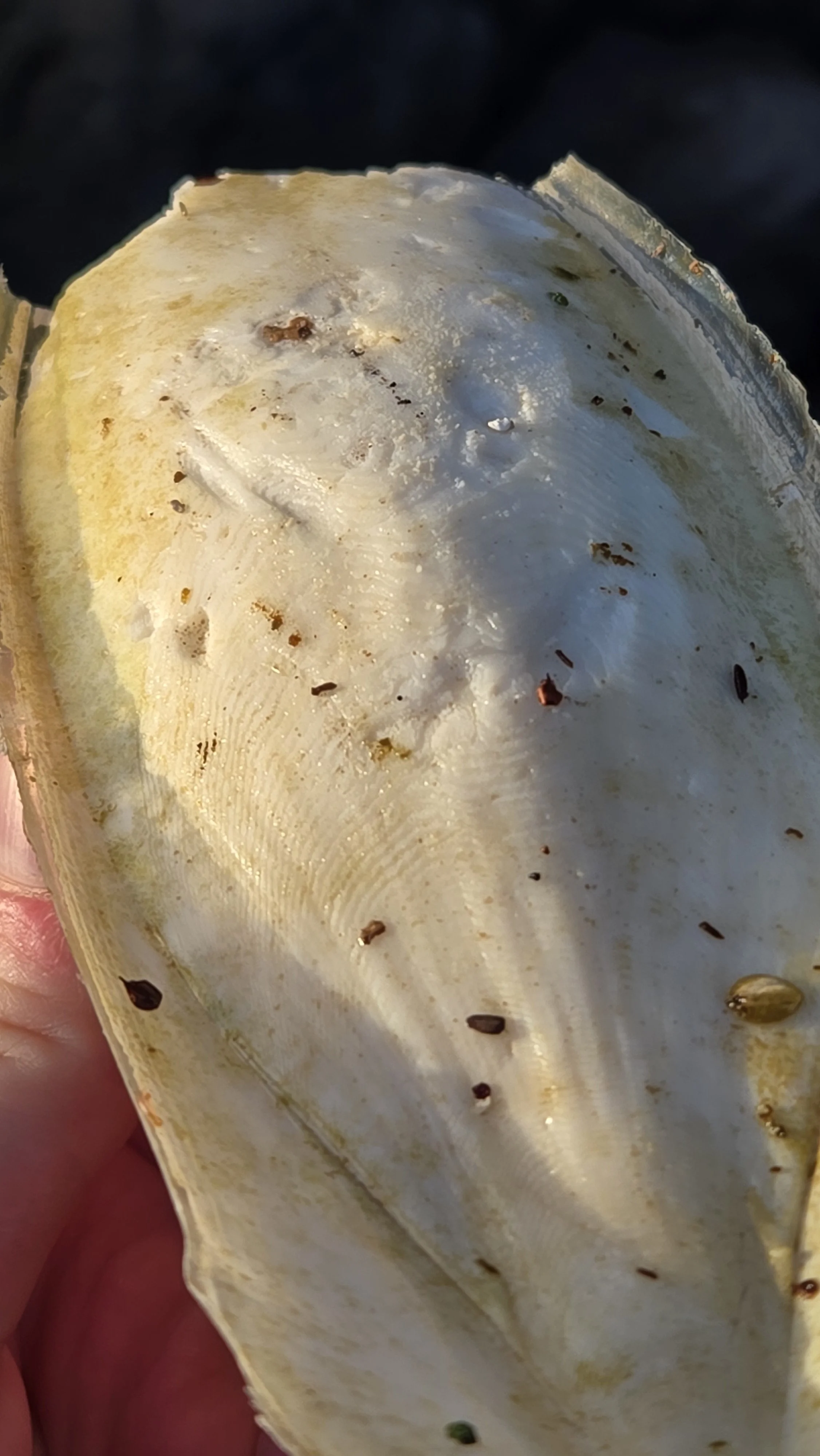
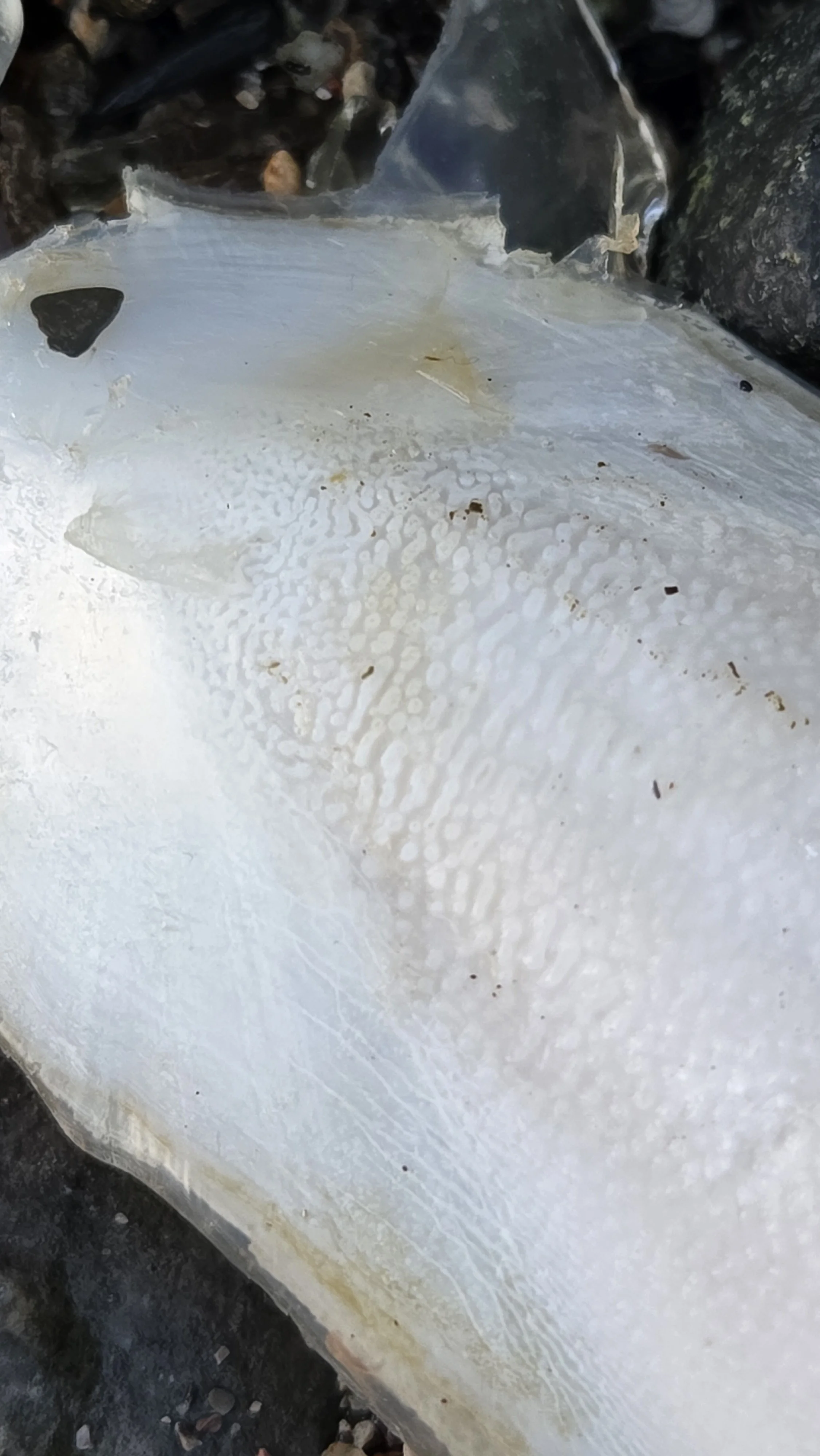
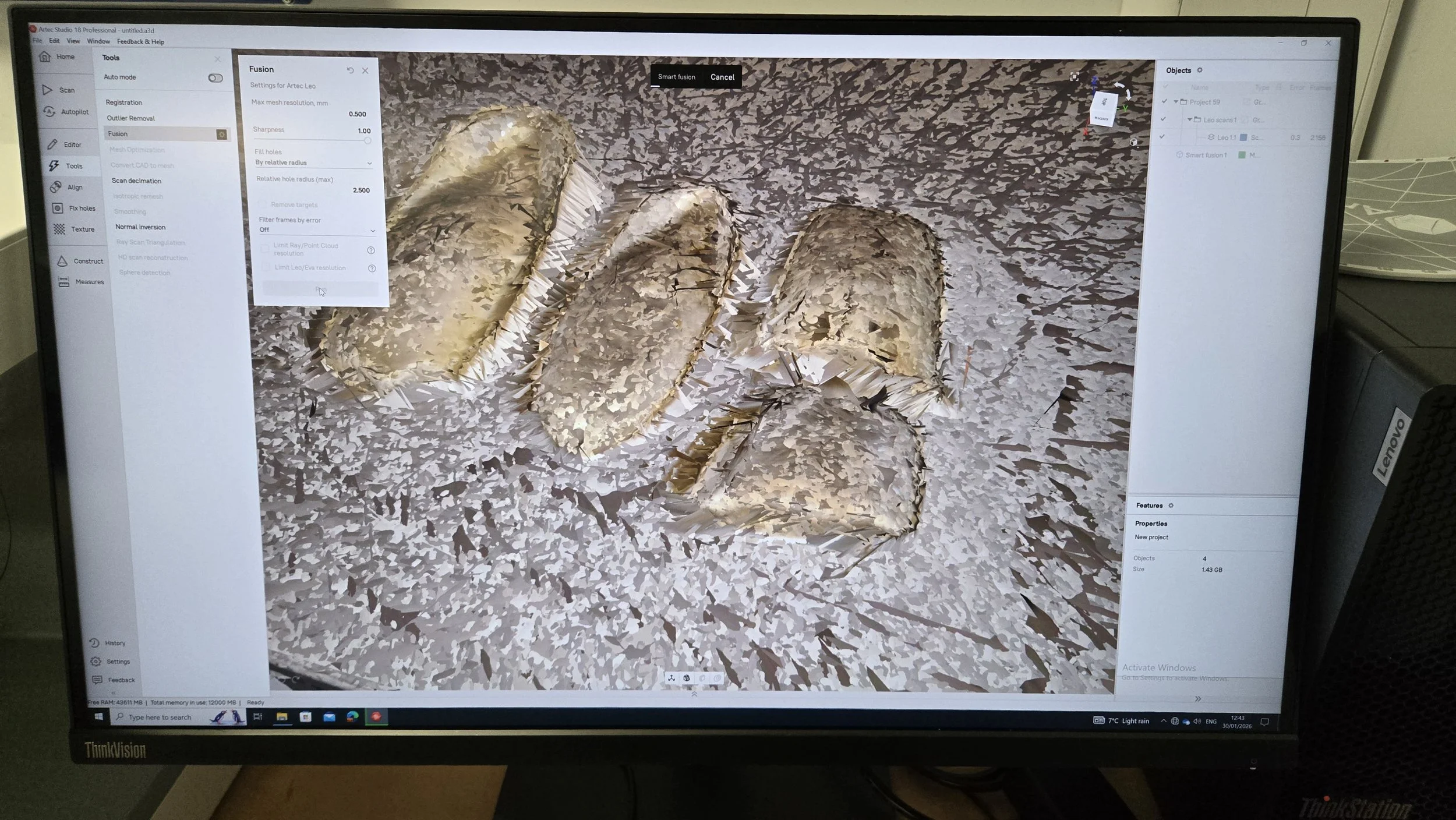
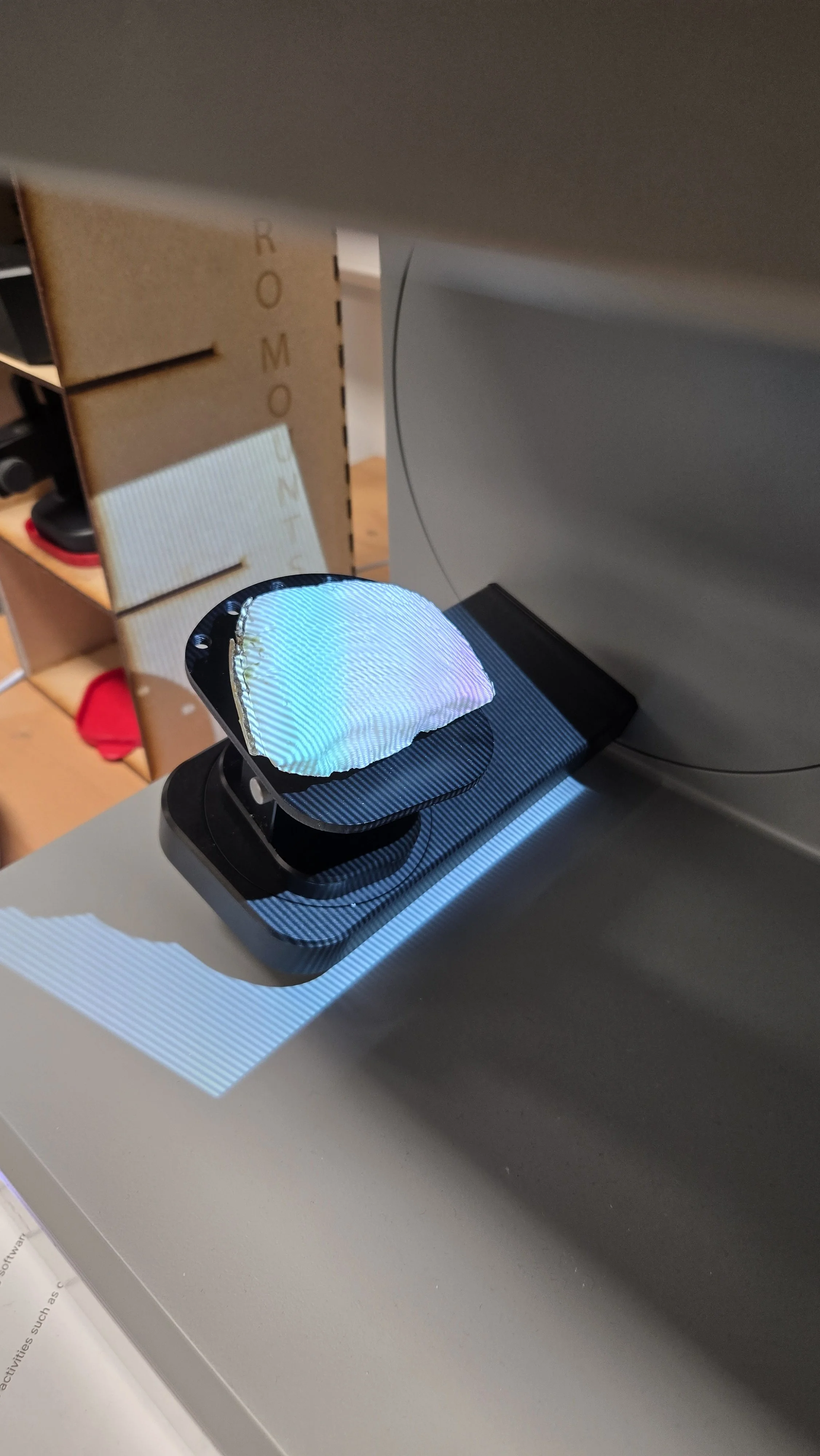
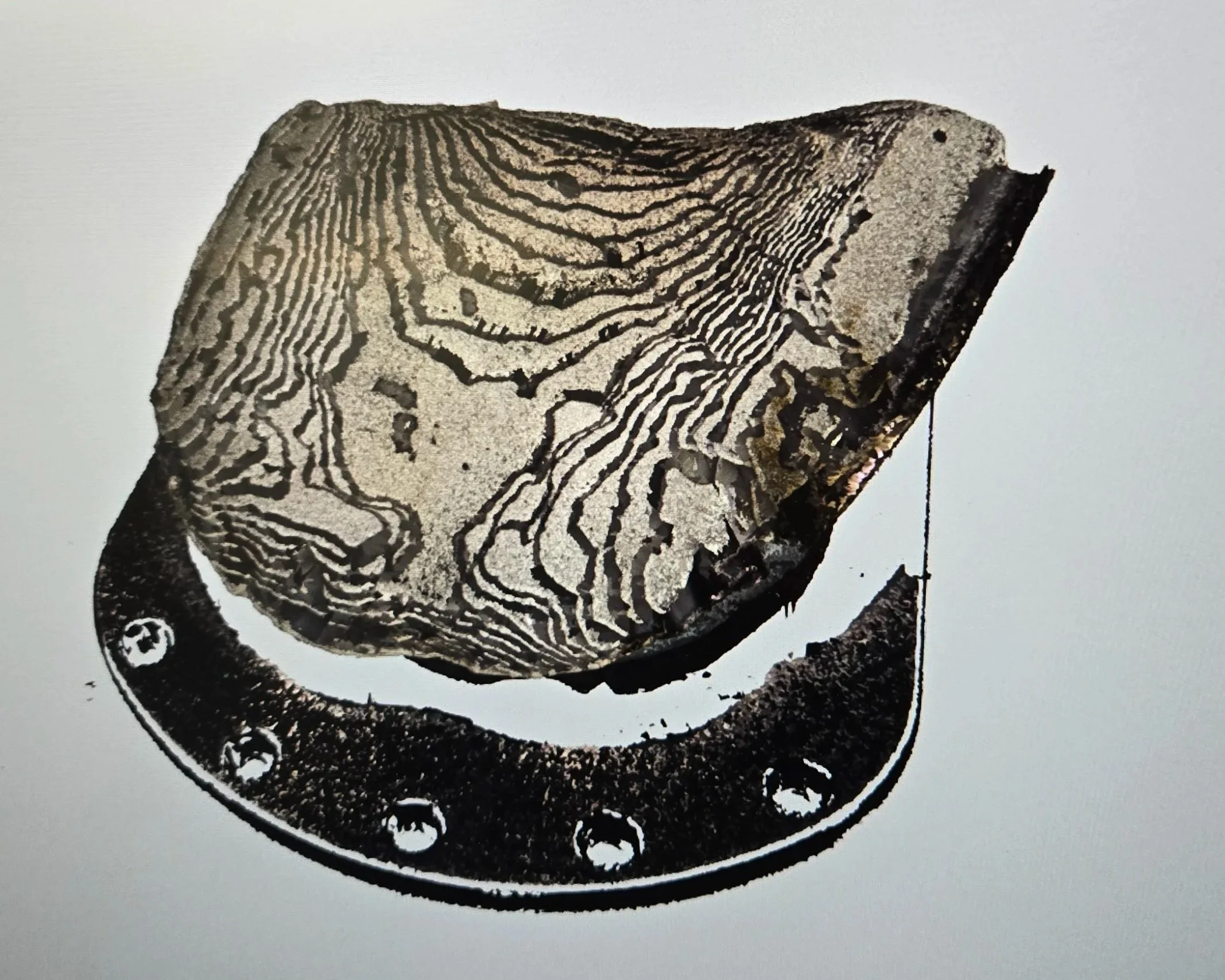
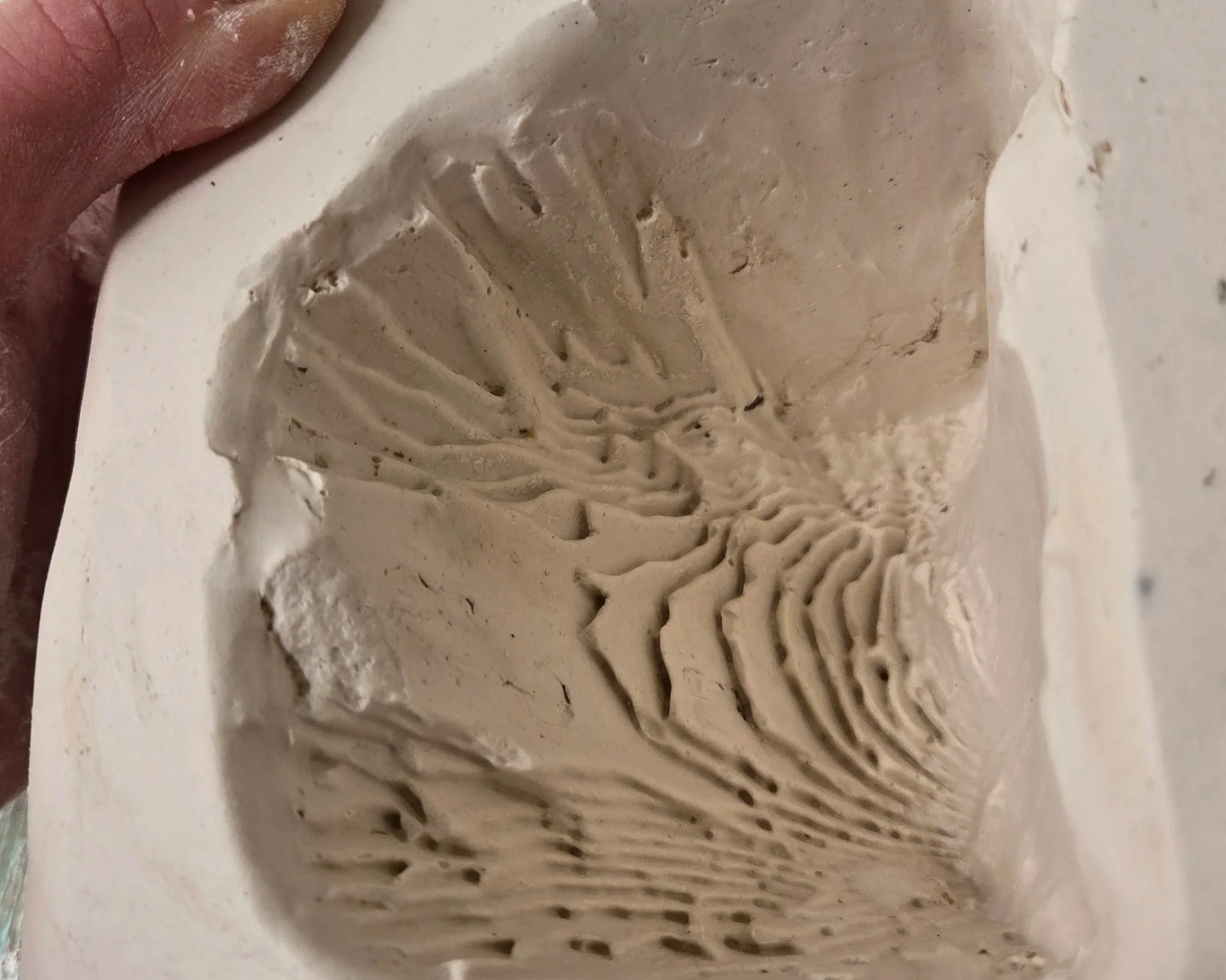
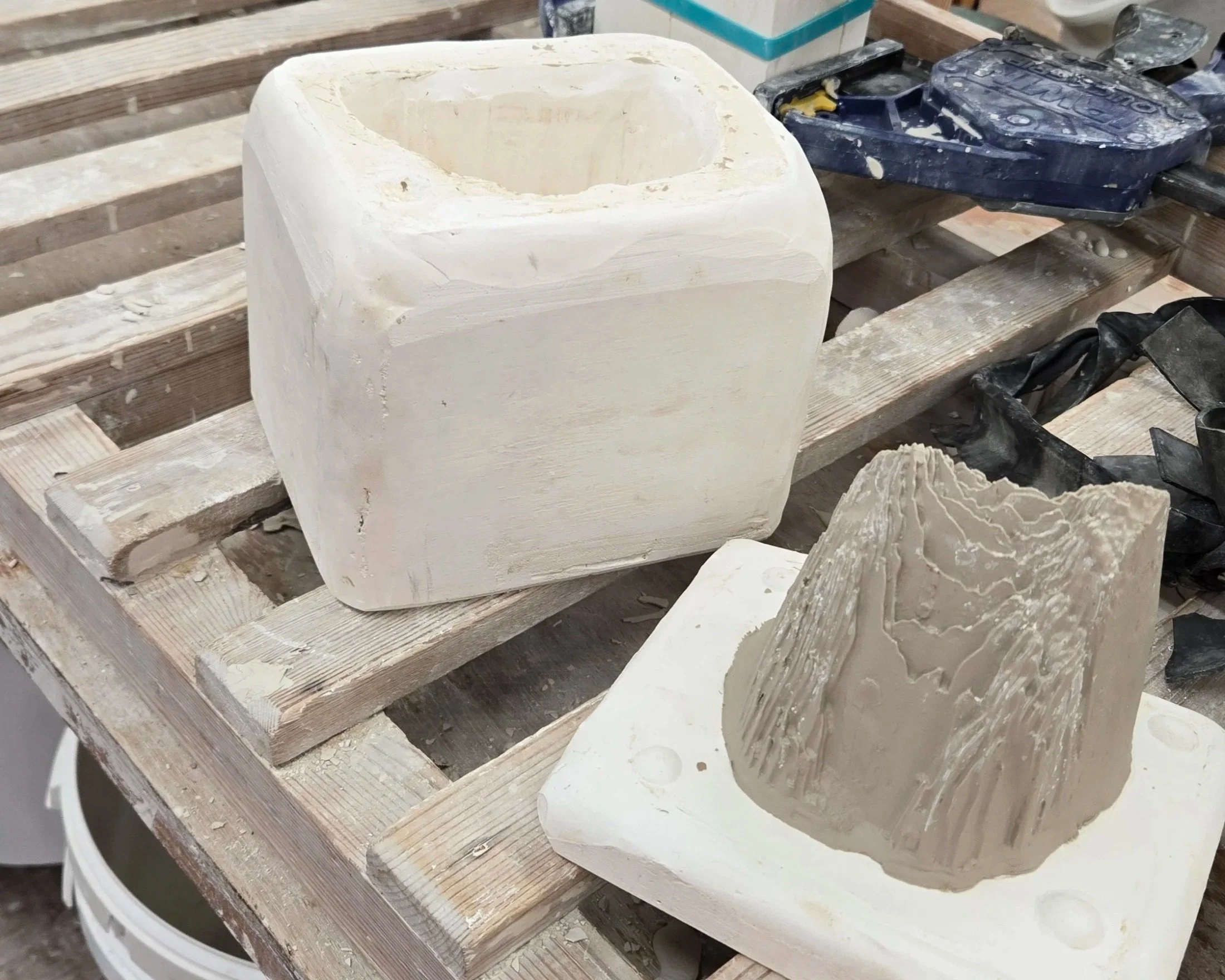
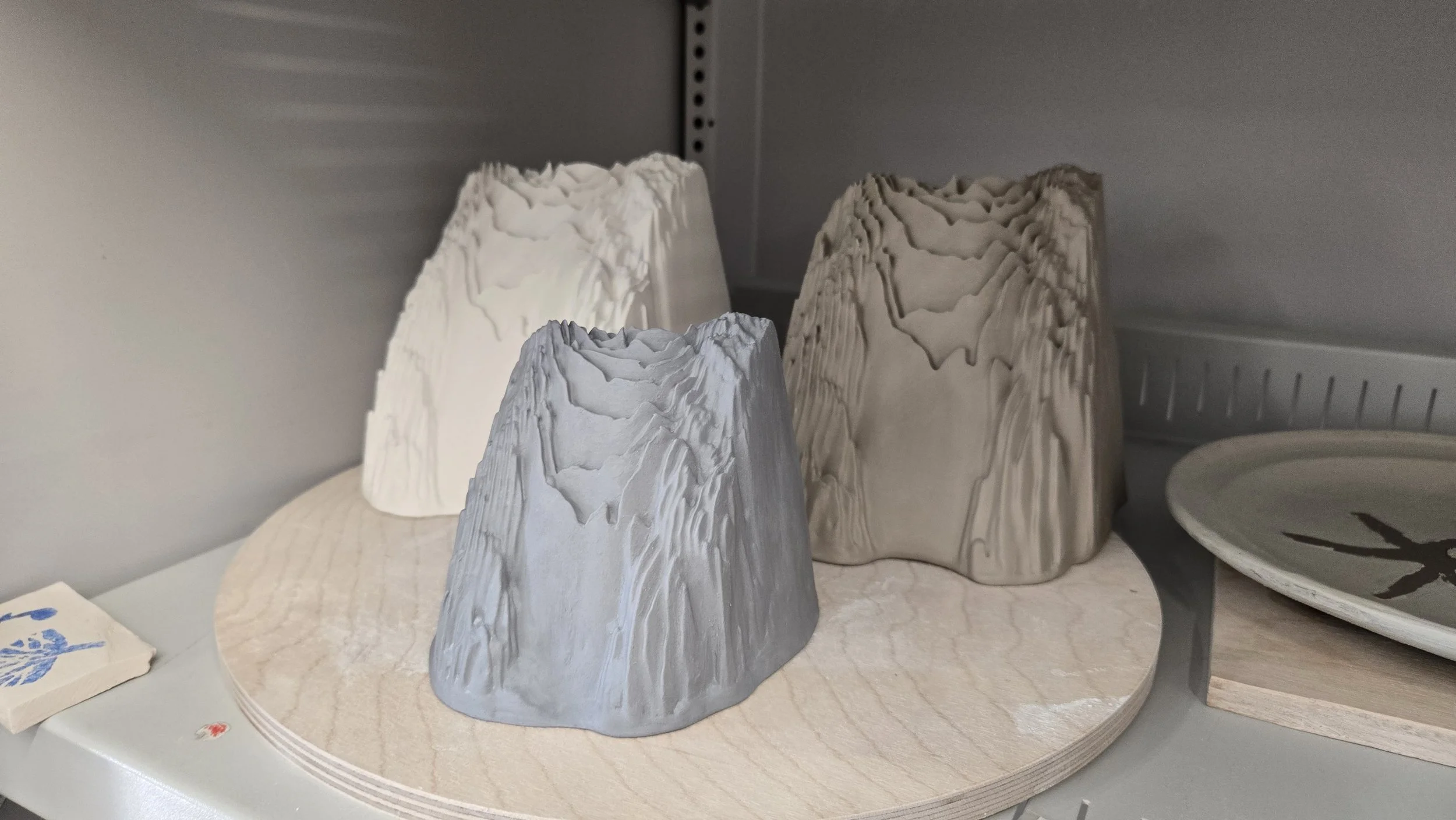
Experimenting with 3D scanning first using a mobile phone to get a sense of opportunities and limitations. I explored different natural forms and was fascinated by the exposed calcium layers of cuttlefish bones found on the Plymouth coastline. Scanning this in with the phone app gave me results that didn’t capture the small textural details of the surface. I had multiple cuttlefish bones in various sizes so I used the Artec Leo for the larger pieces and the Artec Micro for the smaller pieces as it captured more of the surface details. Using Nomad Sculpt, I explored with modifying the scan to accentuate certain features and landed on stretching out the scan to highlight the different calcium layers. This form was then 3D printed to make a plaster mould which was then used to cast parian which is a translucent porcelain. Once cast, some clean-up was required on the imperfections of the mould and the bottom cut out to make room for the bulb. The form was then left to dry and fired in the kiln. Parian is self glazing, so didn’t need glazing but required some sanding with high grit sandpaper. Then it was ready for the second firing which makes the body more translucent but also makes it shrink again. To make the base, I scanned the bottom of the final fired body to get exact dimensions and made a CNC cutting path as well as a laser cutting file to product the bases. The last step was wiring the bulb holder to the cord and plug, this was then PAT tested before the exhibition